FOREST RESTORATION
Riparian Restoration
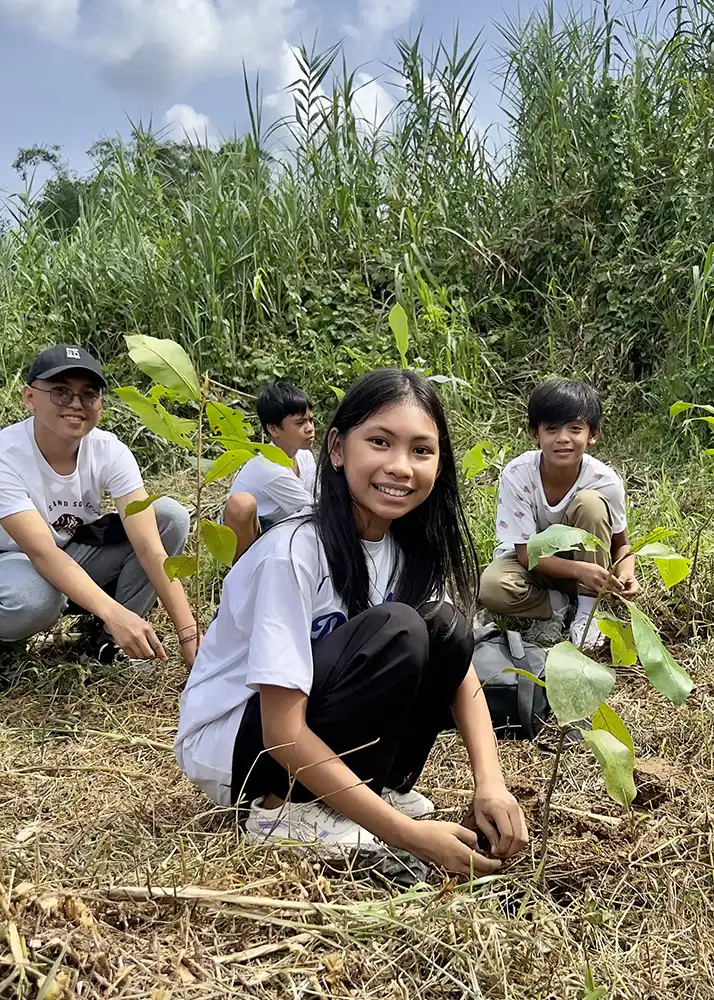
Riparian areas refer to the forested areas lining streams and rivers. On Leyte Island much of the riparian forest has been damaged or removed to make way for agriculture or fuelwood for cooking fires. Invasive grasses called Napier dominate riverbanks in dense clusters preventing natural regeneration from occurring.
Resilient planting systems
Finding ways to restore these areas can be incredibly challenging which is why we have spent a considerable amount of time investing in developing planting systems that can out compete invasive plants as well as withstand frequent flooding events associated with climate change.
Strengthening Ecosystems and Protecting Communities
Years of dedication has led to the development of a robust planting system that quickly outcompetes invasive plants and can hold its own in a world where the climate is rapidly changing.
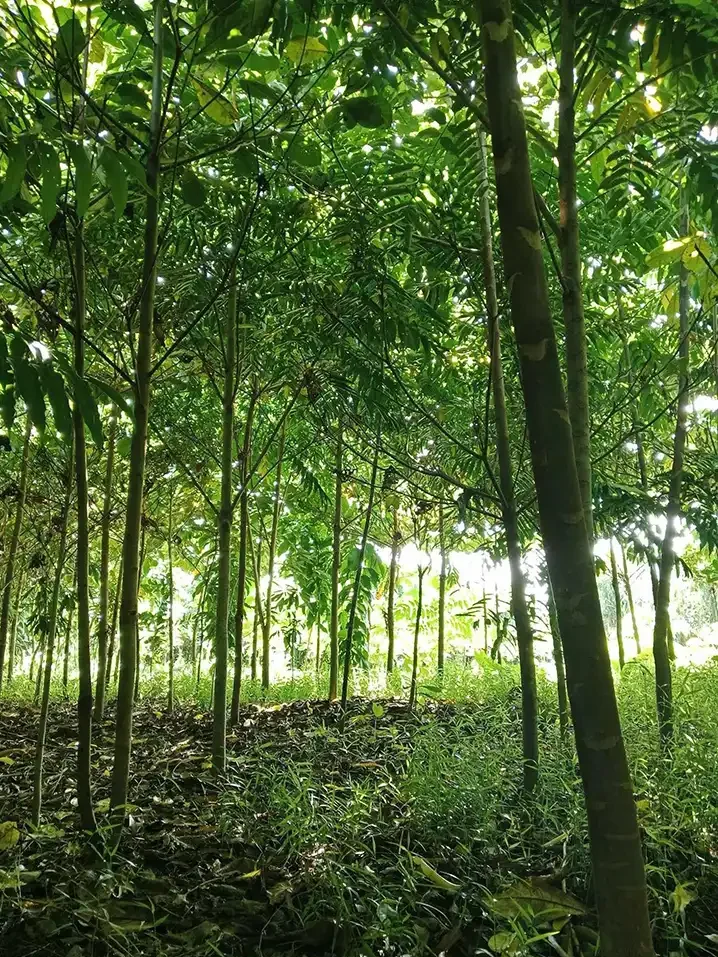
Our planting system develops surprisingly fast in the tropical climate of the Philippines and turns into beautiful new patches of forest within three years of being installed.
These new forests offer ecosystem benefits to local wildlife that re-populates quickly under the shade of new canopies while providing benefits to local residents such as diffusing flood waters to residents not to mention the added value of creating natural beauty in the communities they live in.
Sustaining Forests and Upland Livelihoods
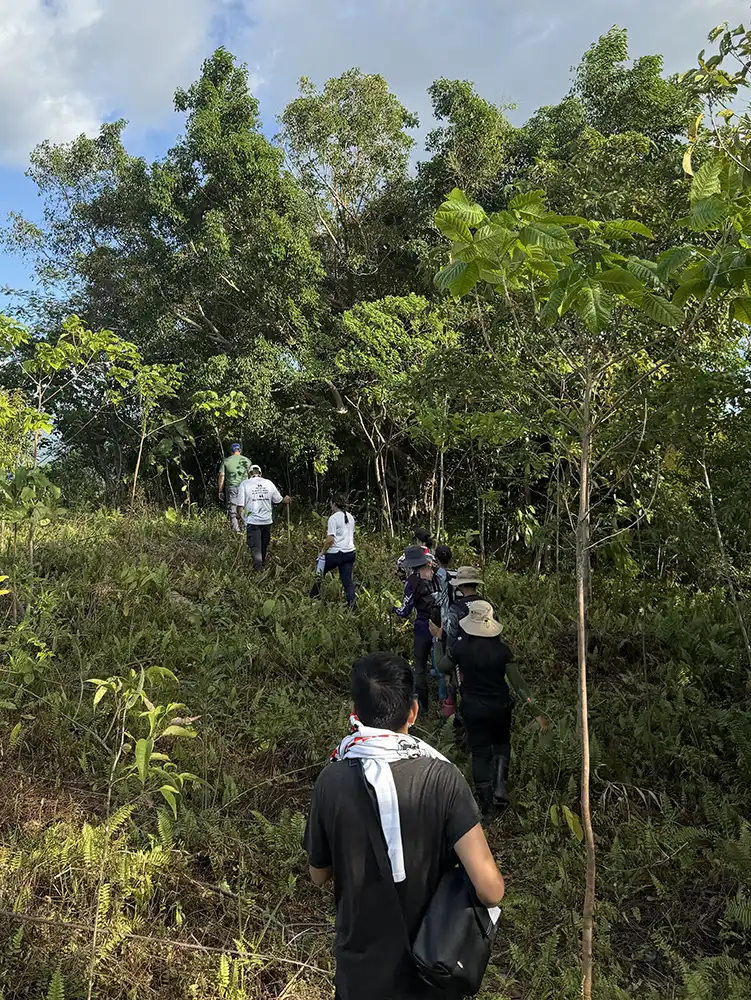
We apply a similar strategy of planting to our more mountainous planting sites where fields of rice give way to forested slopes and upland communities who rely on the resources the forest has to offer.
Local lumber and bamboo is harvested to make building materials and rattan, a vining plant, aka wicker, is carefully collected due to its thorn covered jacket and processed into strong cordage for lashing bamboo structures and making tradition style furniture.
Restoring Forests
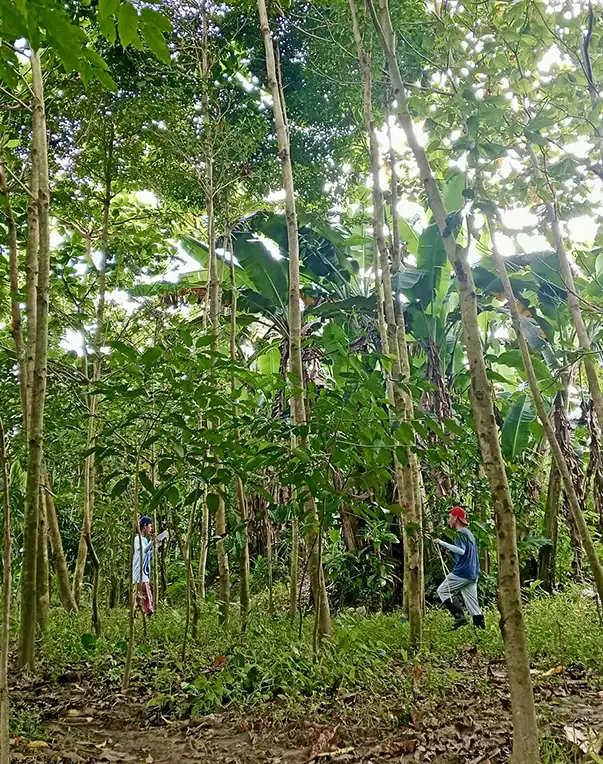
LRP works to establish new forest in areas where Kaingin, or slash and burn agriculture was previously practiced. Although initially effective, mountainous soil and nutrients erode quickly and Kaingin areas are left deforested and degraded.
New plantations of trees in our mountain planting sites help lessen the effects of erosion and begin to restore nutrients to depleted soils. As they continue to develop, they will go on to provide habitat for wildlife and a sustainable source of resources for communities who depend on the forest for their livelihoods.
Parnter
The Leyte Reforestation Project is proud to partner with Reforest Our Future as a planting partner.
Thank you to our Patch Global Network sponsors for making forest restoration a reality!